Meet the Women Who Shaped Leiden's History
International Women’s Day is approaching fast - a good time to remember and celebrate important women of Leiden. Despite being less talked about, they helped create the reality we live in today. So, let’s dive into the stories of five incredible women that shaped Leiden’s history.
Magdalena Moons
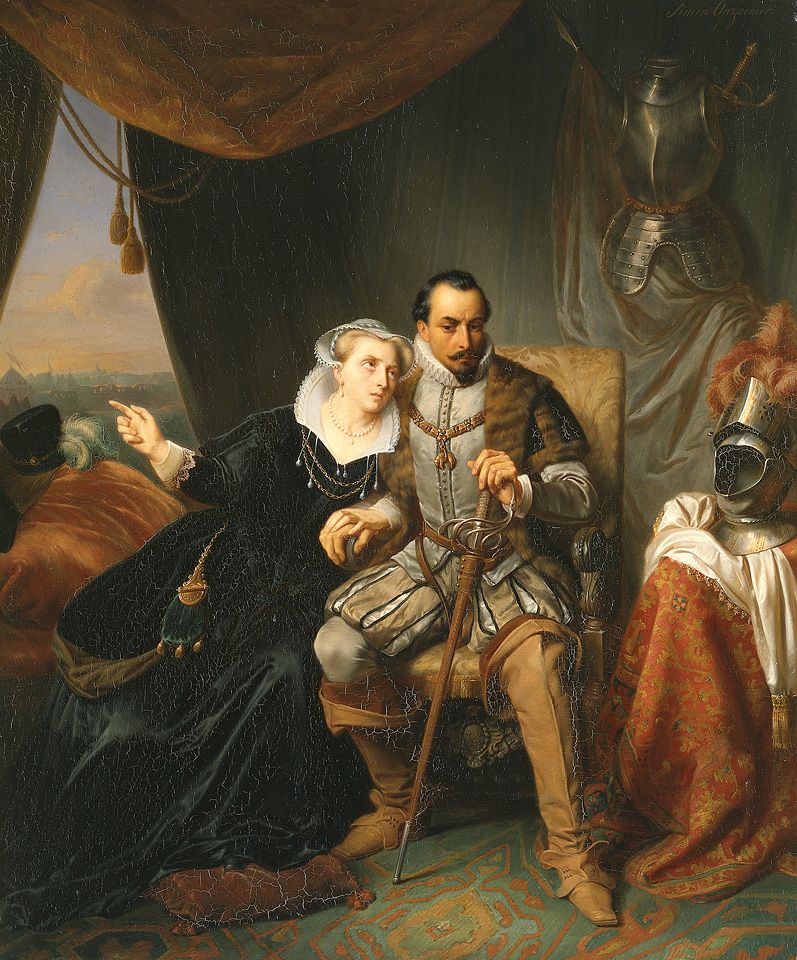
Magdalena Moons (1541-1613) is considered to be a heroine of the relief of Leiden. The story takes place in the summer of 1574 in The Hague, when Magdalena was 33 years old and still unmarried. Two years earlier, the city had fallen into the hands of rebels and many residents that could afford to had soon after fled. Some reports say that at the time The Hague was a deserted city, but Magdalena and her mother chose to stay. She then met the Spanish commander Francisco Valdez, who seized The Hague on October 30th, 1573. Magdalena became Valdez’s lover, and it’s said she played a crucial role in the relief of Leiden. During a dinner Magdalena persuaded Francisco, in exchange for her hand in marriage, to delay a final attack on Leiden. The city was unprepared for a second siege and was starving, and she wanted to protect her family and friends there. Francisco agreed to the delay, which eventually changed the course of history. On October 3rd, 1574, the Spanish army was forced to flee the raising water as a sudden storm arose that day helping the Water Beggars sail into Leiden and freeing the city. They brought bread and herring to the starving people which is still eaten every 3 October in Leiden.
Anna Maria van Schurman
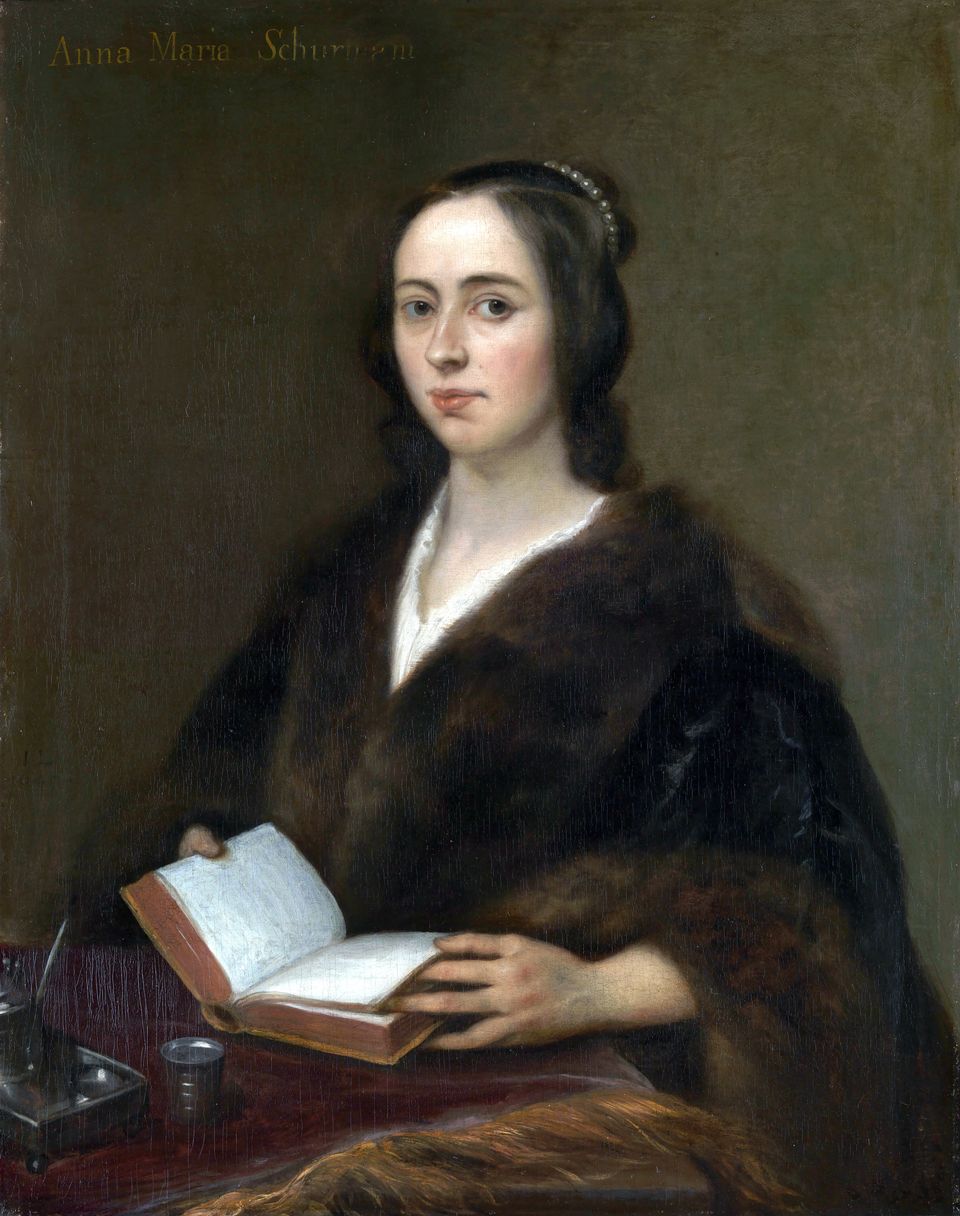
Anna Maria van Schurman (1607-1678) was a unique woman with many talents. She is mostly known for being the first woman to study at university in the Netherlands. Although it’s said she studied at Utrecht University, some historians claim that she requested to the Leiden’s Academy of Directors an elevated platform from which she could watch lectures at Leiden University without anyone seeing her. She exchanged scholarly ideas with several Leiden professors as well. Van Schurman was not only fluent in 14 languages but was also a theologian and accomplished artist. She produced refined engravings, miniature portraits, paper cuttings, and multilingual calligraphic works that circulated among European intellectual elites. She used her cultural prestige to argue publicly for women's intellectual capabilities. Her legacy lies in demonstrating that artistic excellence could function as a pathway to intellectual authority for women in the 17th century.
Maria Sibylla Merian
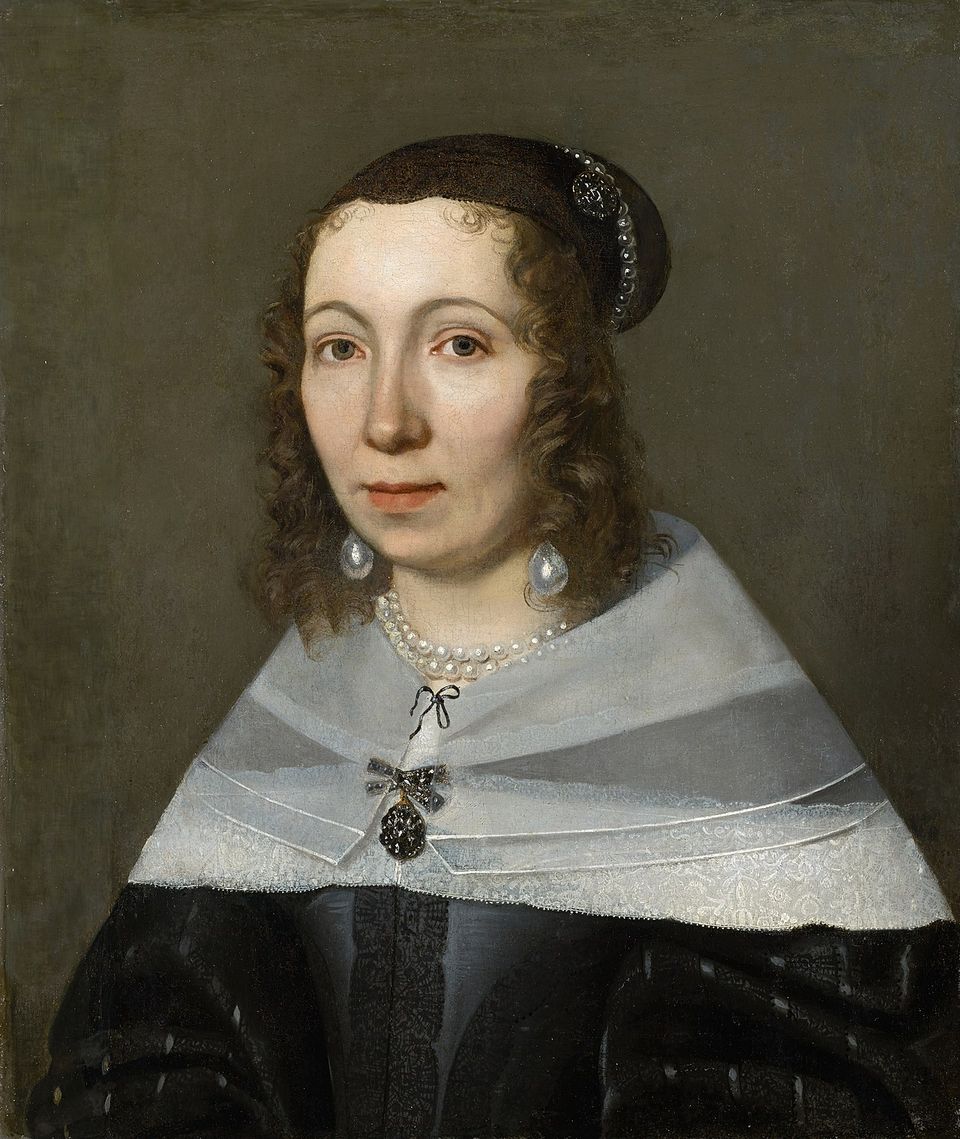
Maria Sibylla Merian (1647-1717) was a groundbreaking naturalist and scientific illustrator whose work became deeply embedded in Leiden’s natural history collections. In 1699 she and her daughter went on a research expedition to Suriname to study insect metamorphosis in the tropical environment. During this time, she created the famous book Metamorphosis Insectorum Surinamensium that features 60 hand-coloured plates of insects and plants, showcasing their life cycle with scientific accuracy and artistic beauty. The illustrations depict caterpillars, butterflies, spiders, ants, bees and more, often on their host plants. Specimens and artistic vision linked to her research later became part of Dutch scientific networks, including those centred on Leiden’s botanical and zoological institutions. Merian’s work was revolutionary because she demonstrated the full life cycles of insects at a time when spontaneous generation was still widely believed.
Wilhelmina van Itallie-van Embden
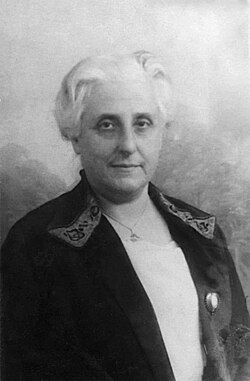
Wilhelmina van Itallie-van Embden (1870-1959) was a politician, journalist, and advocate for the women’s rights movement. She moved to Leiden in 1907 with her children and husband, Leopold van Itallie (1866-1952), who was appointed Professor of Pharmacy and Toxicology. She soon became involved with the Association for Women’s Suffrage and served as a source of information for many Leiden feminists. She ensured the Leiden branch of the association did not disband after a decrease in members. She later joined the National Council of Women, the umbrella organization for women’s organizations. She spoke during propaganda tours around the country and at national and international suffrage events. Later in her career she started working as a politician and journalist. She published interviews with well-known politicians, feminists and scientists in the Haagse Post and the Nieuwe Rotterdamsche Courant. She was one of the few women on the Leiden Municipal Council before WW2 and served on several political bodies like Provincial Council of Zuid-Holland and the House of Representatives.
Ewine van Dishoek
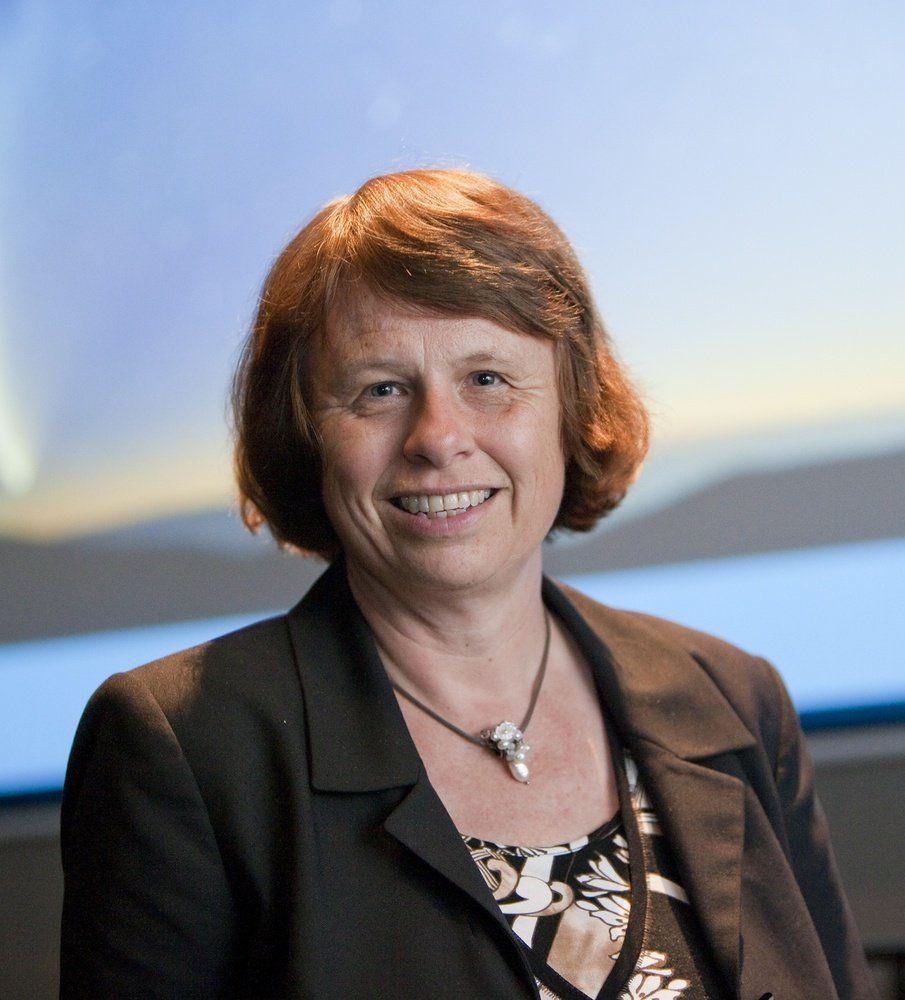
Ewine van Dishoek is an astrochemist whose work transformed the understanding of how stars and planets form. She was born in Leiden in 1955 where she spent most of her childhood and adolescence, later obtaining two bachelor's degrees in chemical physics and mathematics at Leiden University. Later in her career she started focusing more on astrochemistry. Her research combines theory, laboratory experiments and telescope observations to trace how molecules evolve inside interstellar clouds, the birthplace of planetary systems. After studying and working in the US, she returned to Leiden in 1990 where she built influential research programs and played major leadership roles in international facilities such as the Herschel Space Observatory and the Atacama Large Millimeter/submillimeter Array (ALMA). Ewine received the 2018 Kavli Prize in Astrophysics for elucidating the chemical life cycle of interstellar matter and its role in star and planet formation, helping elevate astrochemistry to a central field in modern astronomy.